
ORTHODONTICS
Braces in Richmond Hill

Smiles on Yonge offers traditional metal braces, self-ligating braces, clear ceramic braces, custom 3D printed LightForce braces and clear aligners for children, teens and adults. Dr. Rashed will assess your needs, preferences and treatment goals at the consultation and recommend the most suitable option.
Types of braces
Traditional metal braces
Traditional metal braces are the most common type of braces and are more comfortable than ever. Made of high-grade stainless steel, metal braces straighten your teeth using metal brackets and archwires. With metal braces, you can add coloured elastics for a more unique, colourful smile.
Self-ligating braces
Self-ligating braces are made from the same materials as traditional braces. However, self-ligating braces do not require elastics, meaning fewer appointments and less friction on the tooth. Self-ligating braces come with traditional metal and clear ceramic brackets. They are the same size as metal braces but use a specialized clip in place of elastics to help the archwire guide teeth into place. The clip reduces pressure on the tooth and requires fewer adjustments because there are no elastics to replace.
Clear ceramic braces
Ceramic braces are made of clear materials and are therefore less visible than metal braces. For this reason, ceramic braces are mainly used on older teenagers and adult patients with cosmetic concerns. While they are less visible, they require more attention to oral hygiene because ceramic braces are larger and more brittle than metal braces. For these reasons, ceramic braces are more commonly used on upper front teeth than on lower teeth.
LightForce braces
LightForce braces are custom-made for each patient. Every bracket is 3D printed from a digital scan of your teeth so that it fits the shape and position of that tooth. Because the fit is made for you, treatment may need fewer adjustments and some patients find the brackets more comfortable. Smiles on Yonge offers LightForce braces for teens and adults.
Clear aligners
Clear aligners are a series of invisible, removable and comfortable plastic trays that straighten your teeth like braces. The aligners are invisible and removable, so you can eat and drink what you want while in treatment, and brushing and flossing are less of a hassle. The aligners are comfortable and have no metal to cause mouth abrasions during treatment.
Orthodontic appliances
Some treatment plans use an appliance alongside braces, or before braces go on. Dr. Rashed will explain which appliance, if any, your plan needs.
Palatal expander
Appliances such as the palatal expander, commonly known as a rapid palatal expander, are used to widen the upper jaw. This will allow the top and bottom teeth to fit together properly. The appliance works best for patients under 15 because up to this age, the bones in the jaw are still flexible.
The expander has a screw that attaches to the teeth by bands which wrap around, and it is activated by turning the screw with a key. As the upper jaw is widened by the expander, it allows a space to develop between the front teeth. This space will usually close by itself within a month. Once the expansion has been successful, the expander will remain in the mouth for about four to six months to stabilize before it is removed.
Twin Block
Twin Block functional appliance is a removable appliance that uses upper and lower bite blocks. It positions the lower jaw forward to correct a smaller and retruded lower jaw and improve the overbite and overall lip-chin balance through mandibular growth modification.
Headgear
Headgear is another tool we use to make more space for teeth to come in. It can be attached to the upper molars using headgear bands and tubes. This helps draw the molars backward into the mouth, opening space for the front teeth to be moved back as well. The front teeth will be shifted backward using braces and bands.
Headgear is most often used for correcting anteroposterior discrepancies in Class II malocclusions. It slows or stops upper jaw growth and can be used to prevent or correct an overjet. The headgear will attach to the upper molars using a facebow. A neck strap or headcap anchors the headgear to the back of the neck or head.
Facemask
The facemask is an appliance commonly used in the early treatment of Class III malocclusions where the upper jaw is anteroposteriorly (front to back) deficient. It is designed to apply forward and downward traction on the upper jaw. A metal bar acts as a framework to maintain support to the forehead and chin. An extraoral force is applied through two elastics attached to hooks mounted on a fixed intraoral appliance, usually a palatal expander, toward an adjustable bar attached to the vertical framework.
Temporary anchorage devices
Temporary anchorage devices are small titanium screws or titanium plates placed into the jawbones to serve as anchors and make some complicated tooth movements possible. TADs are removed after orthodontic treatment is complete.
Some tooth movements that are very hard or even impossible without this orthodontic appliance include intruding an opposing molar to make room for a bridge, uprighting a tipped molar to make space for an implant, and distalizing the upper molars to correct the overjet. Placing TADs is a simple procedure performed by an orthodontist, oral surgeon, or periodontist.
Elastics
Elastics are commonly used with braces. During different stages of treatment, elastics help move individual teeth and align the jaw. They must always be worn, especially while eating.
Life with braces

Braces move teeth gradually, so most patients go through a short adjustment period. Here is what to expect, what to eat, and how to manage soreness.
Eating with braces
Avoid foods that can bend a wire or loosen a bracket.
- Chewy foods such as bagels and licorice
- Crunchy foods such as popcorn, chips and ice
- Sticky foods such as caramel candies and chewing gum
- Hard foods such as nuts and hard candies
- Foods you bite into, such as corn on the cob, apples and carrots; cut corn off the cob and slice apples instead of biting into them whole.
Softer foods are fine throughout treatment.
- Dairy such as soft cheese, pudding and milk-based drinks
- Breads such as soft tortillas, pancakes and muffins without nuts
- Grains such as pasta and soft, cooked rice
- Meats and poultry such as soft, cooked chicken, meatballs and lunch meats
- Seafood such as tuna, salmon and crab cakes
- Vegetables such as mashed potatoes, steamed spinach and beans
- Fruits such as applesauce, bananas and fruit juice
- Treats such as ice cream without nuts, milkshakes, Jell-O and soft cake
Managing soreness
Mild soreness in the first one to two weeks after braces go on, and for a day or two after each adjustment, is normal. A warm saltwater rinse and an over-the-counter pain reliever usually help. Orthodontic wax placed over a bracket or wire can stop it from irritating the inside of the mouth.
Brushing with braces
If you have braces, it is time to learn how to maintain them properly. Our team will show you the proper technique.
Brush the outside and inside surfaces of your teeth with small, gentle, circular motions, positioning the toothbrush head at a 45-degree angle to the gum line. Brush your teeth’s chewing surfaces and the inside surface of your front teeth using short, gentle, back-and-forth motions. Pay close attention to the areas around your brackets or other appliances.
Flossing with braces
Flossing with braces is especially important, and the team at Smiles on Yonge can show you how to floss correctly. Flossing daily helps keep your teeth and braces clean, which also helps keep your treatment on track. To floss with braces, use a floss threader or special orthodontic floss to thread the floss behind each wire.
Wrap the ends of the floss around the pointer fingers of both hands but leave a few inches of taut floss between them. Gently slide the floss between each set of teeth using a back-and-forth motion. Floss the sides of each tooth beneath the gum line to remove plaque and food particles. Repeat this process until you have flossed all of your teeth. If you find that your floss is not removing all the food particles between your teeth and around your braces, ask us about a water flosser.
Retainers after braces
Finally, your braces have been removed, and your smile is beautiful, straight and metal-free. However, your treatment is not quite complete. To keep your smile looking its best, you will need to wear a retainer to preserve and stabilize your results.
Your orthodontic retainers help control or limit potential changes in tooth position. You use them after braces to hold your teeth in their correct alignment while the surrounding gums, bone, and muscle adjust to their new position.
Types of retainers
Retainers are custom-made and can be removable or fixed.
- Traditional removable retainers (Hawley retainers) typically include a metal wire that surrounds the front teeth and attaches to an acrylic arch that sits on the roof of the mouth.
- Aligner-style retainers, or Essix retainers, look similar to clear aligners and offer a more aesthetic alternative to Hawley retainers. They are produced from a 3D-printed model of your newly aligned teeth.
- Fixed lingual wire retainers consist of wires bonded behind the bottom or top front teeth, or both. You often keep the device in place for life.
Removable or fixed
- You can remove retainers to eat and for hygiene routines.
- Removable retainers can get lost easily, so remember to keep yours in the case whenever you remove it to eat or brush.
- A fixed retainer is preferable if you don't want to keep track of it or worry about how many hours per day you must wear it.
- Teeth with fixed retainers require a little extra attention to remove tartar while flossing. Patients with fixed retainers often must use floss threaders to pass dental floss through the small spaces between the retainer and the teeth.
Braces FAQs
Smiles on Yonge offers traditional metal braces, self-ligating braces, clear ceramic braces, custom-made LightForce braces and clear aligners such as Invisalign® for children, teens and adults.
Dr. Rashed will assess individual needs, preferences and orthodontic requirements during the consultation. Factors such as treatment goals, lifestyle and aesthetic preferences will be considered to determine the most suitable type of braces.
The duration of orthodontic treatment varies by case. Different types of braces may have different treatment timelines. Dr. Rashed will discuss the estimated duration during the initial consultation.
Children should have an initial orthodontic assessment around the age of 7. Early assessment allows an orthodontist to detect and address potential issues, ensuring more effective and timely treatment.
Yes. Braces move teeth by design, so some looseness during treatment is expected. Teeth stabilize once treatment is complete.
Call the office so our team can check and fix it. Do not try to fix a loose wire or band at home.
Yes, with a mouthguard made to fit over braces. Ask our office about mouthguard options.
Brush your teeth for two minutes at least twice a day and floss daily. A floss threader or water flosser helps. Keep up with regular cleanings, since food collects more easily around brackets.
Yes, a water flosser can be a helpful tool for kids with braces. It can effectively remove debris and bacteria around brackets and wires. It complements traditional flossing, so follow our recommendations for a routine that suits your child.
The duration of retainer wear varies, but it is typically recommended to wear them full time for the first few months and then transition to nighttime wear. Dr. Rashed will provide a personalized plan based on individual needs.
If a patient discontinues retainer wear, there is a risk of teeth shifting over time. Regular follow ups with Dr. Rashed ensure that any necessary adjustments to the retainer plan can be made to maintain results.
Retainers can be replaced if lost or damaged, but replacement costs may apply. Contact our office promptly to discuss the situation and the next steps.
Yes. We offer payment arrangements and a courtesy discount for payment in full, and our staff help with insurance claims. See our Costs and Financing page or call us for a consultation.
Clinic Hours
Tuesday
Wednesday
Thursday
Friday
Saturday
9:30am – 6:30pm
8:00am – 4:00pm
9:30am – 6:30pm
10:00am – 4:00pm
by appointment only
Other Orthodontics Services
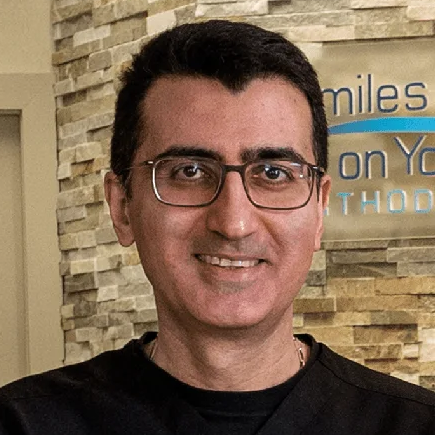
Dr. Roozbeh Rashed
Dr. Roozbeh Rashed, DDS, MSc (Ortho), FRCD(C) is a Certified Specialist in Orthodontics. He completed his Doctor of Dental Surgery degree in 2002 and obtained a Master of Science degree in Orthodontics in 2008. In 2015, he completed the residency program in Orthodontics and Dentofacial Orthopedics at the University of Toronto. Dr. Rashed is a Fellow of the Royal College of Dentists of Canada.
SEE INSIDE OUR OFFICE
Where Pediatric Comfort Meets Orthodontic Precision
Take a peek inside our warm, modern Richmond Hill clinic, thoughtfully designed for kids, teens, and families.
From playful touches to high-tech care, every detail supports growing smiles.