
BLOG
Braces vs. Clear Aligners for Teens | A Parent’s Honest Guide

If your teen needs orthodontic treatment, they may already have a strong opinion about how it should happen. Some teens campaign hard for aligners because nobody at school will notice them. Plenty of others prefer braces: no trays to keep track of, coloured bands to pick at every visit, and no risk of a retainer-shaped object ending up in the cafeteria garbage. Whichever side your kid is on, the more important question for you as a parent is which option is best for their teeth.
Here’s the honest answer before we get into the details: there is no single winner, because each case is unique. In many cases, aligners work well, but only if they are worn 20 to 22 hours a day. Peer-reviewed systematic reviews comparing aligners and braces consistently find that the type of tooth movement needed, and how reliably the appliance is worn, matter more than the appliance itself. For teens who lose their water bottle twice a week, braces are often the more predictable choice. The right answer depends on your child’s bite and your child’s habits.
This guide walks through how each option works day-to-day, what to expect on cost in Ontario, and the questions worth asking at your consultation. If you’re earlier in the process and still figuring out whether treatment is needed at all, our orthodontics team in Richmond Hill can assess your child’s bite and tell you honestly whether it’s time.
How each one works, in plain terms
Braces are small brackets bonded to each tooth, connected by a wire. The orthodontist adjusts the wire every 6 to 8 weeks, and the teeth follow it. Braces work around the clock whether your teen thinks about them or not. That’s their superpower.
Clear aligners are a series of thin, nearly invisible plastic trays, each worn for about a week before moving to the next one. Every tray nudges the teeth a little further. Aligners come out for eating and brushing, which is their superpower and their weakness. A tray in a backpack moves nothing.
The daily life comparison parents care about
Eating. Braces come with a real list of banned foods: popcorn, hard candy, sticky candy, whole apples, corn on the cob, gum. Aligner wearers can eat anything, but every snack requires removing the trays, brushing, and putting them back in. In practice, many aligner teens quietly drop the between-meal snacking. Some parents count that as a bonus.
Brushing. Braces make brushing harder and more important. Food hides around brackets, and two years of lazy brushing can leave permanent white marks on the teeth. The Canadian Dental Association recommends brushing after every meal during orthodontic treatment, or at minimum rinsing with water when brushing isn’t possible. Aligner wearers brush normally, but need to brush after every meal before the trays go back in.
Sports, music, and speech. Both work fine for active kids. Braces need a proper mouthguard for contact sports, and we’re insistent about this. Wind and brass players sometimes find braces awkward for a few weeks. Aligners have their own adjustment period: many wearers notice a slight lisp for the first several days as their tongues get used to the trays. It typically fades quickly, but your teen should know it’s coming, especially if they have a presentation or a solo that week.
Comfort. Braces cause a few tender days after each adjustment, plus the occasional poking wire. Aligners cause mild pressure with each new tray and almost never a sharp emergency. Neither is painful in the way teens fear.
Appearance. This is usually the whole campaign. Aligners are close to invisible, but not completely. Most aligner treatments also use small tooth-coloured attachments bonded to some of the teeth to help the trays grip and move them. They’re subtle at first, but they can become more noticeable over time, especially after a few months, because they can pick up staining from coffee, tea, and coloured foods. Braces are visible, though ceramic (tooth-coloured) brackets are subtler than the metal your teen is picturing from your old yearbook photos.
Responsibility. Here’s the honest conversation to have at home. Aligners only work if they’re in the mouth 20 to 22 hours a day, every day, for the whole treatment. Trays get left on lunch trays, wrapped in napkins, and thrown out. Many aligner systems include small compliance indicators that fade with wear, so the orthodontist can see the truth at every visit. If your teen keeps track of their phone, their gym bag, and their commitments, they’ll likely do fine. If not, braces remove the willpower question entirely.
What actually decides it: the bite
Preference matters, but biology votes first. Some tooth movements are simply more predictable with braces, including severe crowding, large bite corrections, and the rotation of certain teeth. Other cases suit aligners beautifully. The American Association of Orthodontists puts it plainly: clear aligners are not right for everyone, and an orthodontist is best qualified to determine which option, or combination of options, fits a given case. This is why the consultation matters more than anything you’ll read online, including this article.
A good orthodontic consultation in Richmond Hill should end with a clear answer to one question: “Is my child’s case one where both options work equally well, or does one give a better result?” If both work, let your teen’s preference win. Buy-in is worth a lot over 18 months of treatment.
What braces and aligners cost in Ontario
You won’t find a fee range in this article, and that’s deliberate. A responsible orthodontist can’t quote a fee, or even a range, without examining the patient first, because the complexity of the case drives the cost far more than the choice of appliance does. Two teens can walk in wanting aligners and leave with quotes that look nothing alike. What we can tell you is what a trustworthy quote looks like once you have one.
Three money questions worth asking at any consultation:
1. Is the quote all-in? Records, adjustment visits, emergency visits, retainers, and post-treatment checks should be itemized or included.
2. What happens if aligner treatment isn’t progressing because of wear time? Ask whether switching to braces mid-treatment carries an extra fee.
3. What does your benefits plan cover? Orthodontic coverage is usually a separate rider with a lifetime maximum per child. Check the rider, not just your general dental coverage. Orthodontic fees for a dependent child may also count toward the federal medical expense tax credit; confirm with the CRA or your accountant.
The part nobody campaigns for: retainers
Whichever option your family chooses, treatment ends the same way, with retainers. Teeth drift for the rest of our lives, and nightly retainer wear is what protects two years of effort and several thousand dollars. Build it into the deal with your teen from day one: the aligners or braces are phase one, and the retainer is forever, or at least for a very long list of nights.
The bottom line for parents
– Both options straighten teeth well when matched to the right case, and matching is the orthodontist’s job, not the internet’s.
– Braces win on predictability and zero willpower required.
– Aligners win on discretion, comfort, and food freedom, and lose everything if they live in a pocket. Expect a brief lisp at the start and small attachments on some teeth.
– Let the orthodontist rule on the bite first. Then let your teen’s honest self-knowledge, with your input, make the final call.
Ready for a real assessment? Book an orthodontic consultation at Smiles on Yonge and ask the one question that matters: does my child’s case suit both options, or does one give a better result? And if your child is younger and you’re wondering about timing, their regular dentist is the right starting point.
FAQs
Frequently Asked Questions
It depends on the case. Each bite is unique, and some tooth movements are more predictable with braces. For many cases aligners work well, but only when they’re worn 20 to 22 hours a day. The orthodontist’s assessment should drive the choice, not preference alone.
20 to 22 hours. They come out only for eating, drinking anything other than water, and brushing.
Some wearers notice a mild lisp for the first several days as their tongues adjust to the trays. It usually resolves quickly with normal talking and reading aloud.
Both cause mild pressure or tenderness when teeth are actively moving, usually for a few days at a time. Neither should cause ongoing pain.
Yes to both. Braces require a well-fitted mouthguard for contact sports. Aligner wearers should ask their orthodontist whether to wear trays or a mouthguard during games.
Treatment stalls, trays stop fitting, and treatment time and sometimes cost increase. Some cases are switched to braces. Wear time is the single biggest factor in aligner success.
References
1. Ke Y, Zhu Y, Zhu M. A comparison of treatment effectiveness between clear aligner and fixed appliance therapies. BMC Oral Health, 2019. https://www.ncbi.nlm.nih.gov/pmc/articles/PMC6343314/
2. Jaber ST, Hajeer MY, Sultan K. Treatment Effectiveness of Clear Aligners in Correcting Complicated and Severe Malocclusion Cases Compared to Fixed Orthodontic Appliances: A Systematic Review. Cureus, 2023. https://www.ncbi.nlm.nih.gov/pmc/articles/PMC10148732/
3. American Association of Orthodontists. Aligners: patient information. https://aaoinfo.org/treatments/aligners/
4. Canadian Dental Association. Orthodontics: patient information. https://www.cda-adc.ca/en/oral_health/procedures/orthodontics/
Recent Posts

Kids’ Dental Emergency Guide | What Richmond Hill Parents Should Do
Smiles on Yonge
August 26, 2026
Braces vs. Clear Aligners for Teens | A Parent’s Honest Guide
david.sahly
August 13, 2026

Setting Your Teen Up for Success Starts with a Healthy Smile
Smiles on Yonge
June 12, 2026

Orthodontist vs Dentist: What’s the Difference?
Smiles on Yonge
March 25, 2026
Your Child’s First Dental Visit: A Parent’s Guide in Richmond Hill
Smiles on Yonge
November 24, 2025
Keep in Touch!
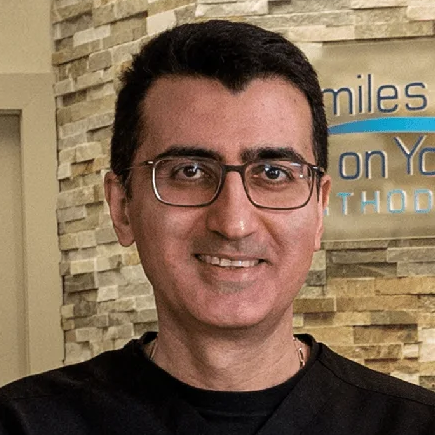
Dr. Roozbeh Rashed
DDS, MSc (Ortho), FRCD(C)
Dr. Roozbeh Rashed, DDS, MSc (Ortho), FRCD(C) is a Certified Specialist in Orthodontics. He completed his Doctor of Dental Surgery degree in 2002 and obtained a Master of Science degree in Orthodontics in 2008. In 2015, he completed the residency program in Orthodontics and Dentofacial Orthopedics at the University of Toronto. Dr. Rashed is a Fellow of the Royal College of Dentists of Canada.